
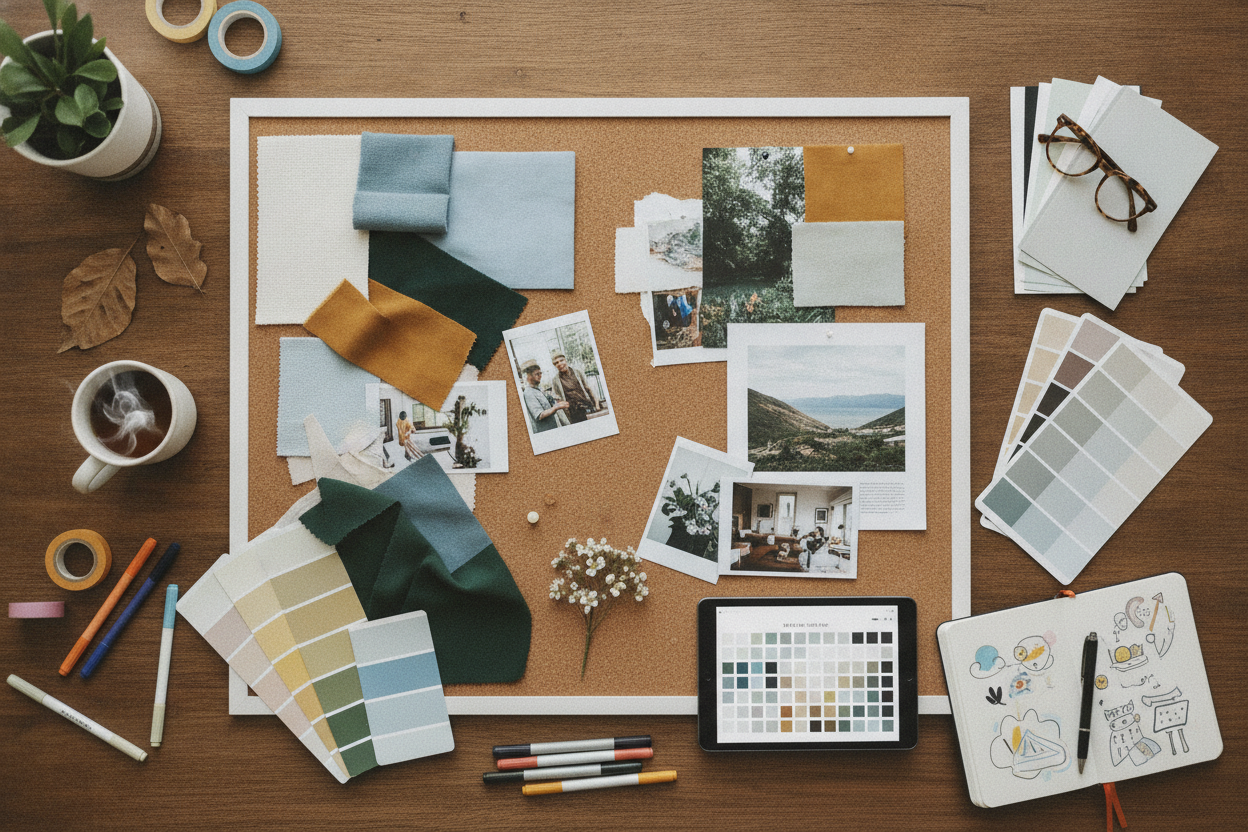
Moodboards are one of the easiest ways to define a creative direction before production begins. They help you collect references, compare styles, and identify the emotional tone you want a post or campaign to convey. For a blog focused on graphics and creative content, moodboards can save time while improving consistency.
A strong moodboard usually combines images, typography samples, color palettes, textures, and motion references. The point is not to copy any single source, but to notice patterns. Which colors repeat? Which compositions feel bold or calm? Which visual cues match the story you want to tell? Those answers can guide the design before you commit to the final layout.
Moodboards are also useful for writers. If the article is about a specific creative process, the reference board can shape the voice as well as the visuals. A dreamy, collage-like board might inspire a softer tone, while a geometric board might suggest a more structured, direct approach. That connection makes the content feel unified.
For content platforms, moodboards can be a bridge between planning and publishing. They help teams and solo creators stay aligned on style while leaving room for experimentation. When used well, a moodboard becomes more than inspiration. It becomes a working tool for building posts that feel intentional from the first draft to the final scroll.
Leave a Reply